top of page
.png)


Simple Ways to Calm the Nervous System After Medical Trauma
Healing doesn’t happen all at once. But small, consistent steps can begin to shift your nervous system. Here are a few simple strategies: 1. Name the Layer: Ask yourself: What am I experiencing right now—past, present, or future? 2. Orient to Safety: Notice your surroundings. What can you see? What can you feel? 3. Work With the Body: Instead of pushing symptoms away, ask what your body is trying to do—and respond gently. 4. Use Body-Based Tools Slow eye movements Diaphragmat

Amy Haertel
Jun 61 min read


Psychologically Healing From Medical Trauma: Why Talk Therapy Isn’t Always Enough
Psychologically healing from medical trauma requires more than talk therapy and how the body plays a central role in recovery. Talk therapy can be incredibly helpful for understanding experiences. But trauma doesn’t just live in thoughts—it lives in the nervous system. This is why psychologically healing from medical trauma has to address the BODY. Have you ever said to yourself: “I know I’m safe… but I don’t FEEL safe.” Healing requires more than insight. It requires experie
Amy Haertel
May 301 min read


Exploring Anxiety after illness. Symptoms Are Not the Problem: Understanding Protection in Trauma
Why Anxiety After Illness Is Not a Problem (It’s Protection)? One of the most important shifts in trauma work is this: Symptoms are not the problem. They are protection. Anxiety says: stay alert. Panic says: something is wrong. Sleep disruption says: don’t fully relax. These responses were helpful during the medical crisis. They increased survival. The challenge is that they haven’t updated. Instead of asking: “What’s wrong with me?” A more helpful question is: “What did my b
Amy Haertel
May 231 min read


How Medical Trauma Shows Up in the Body and Relationships
Medical trauma doesn’t just stay in the past—it shows up in daily life. In the body, this can look like: Anxiety or panic Sleep disruption Feeling constantly on edge Hyper-awareness of bodily sensations Difficulty relaxing These responses can feel confusing, especially when things are medically stable. But your body is not responding to the present moment—it is responding to what it learned. Medical trauma can also affect relationships. People may experience: Withdrawal or di
Amy Haertel
May 161 min read


The Layers of Medical Trauma: Why It Feels Like It Never Ends.
Medical trauma is rarely just one event. It becomes layered medical trauma. For many people, it becomes layered. There is: What happened in the past (procedures, fear, hospitalizations) What is happening now (symptoms, appointments, medications) What might happen next (tests, results, uncertainty) These layers don’t exist separately. They overlap. So when you feel overwhelmed, it is often not just one thing—it is multiple layers being activated at once. This is especially tru
Amy Haertel
May 91 min read


Why the Body Doesn’t Just Move On After Medical Trauma?
After a major medical experience, many people expect that once treatment is over, they will feel better—not just physically, but emotionally. But for many, that’s not what happens. Even after recovery, the body can still feel on edge. Anxiety, sleep disruption, and a constant sense of waiting for something else to go wrong can linger. This often leads to a painful question: “Why can’t my body just move on?” The answer lies in the nervous system. Your nervous system is designe
Amy Haertel
May 21 min read


Survivor’s Guilt After Transplant
Survivor’s Guilt After Transplant One emotional experience that many transplant recipients struggle with, but rarely talk about openly, is survivor’s guilt. After transplant, some people find themselves asking difficult questions such as “Why did I get the organ when someone else is still waiting?” or “Someone had to die for me to live.” Others may quietly wonder whether they deserve the second chance they were given. These thoughts can feel confusing and heavy, especially wh
Amy Haertel
Apr 22 min read
Strategies After Facing Possible Death.
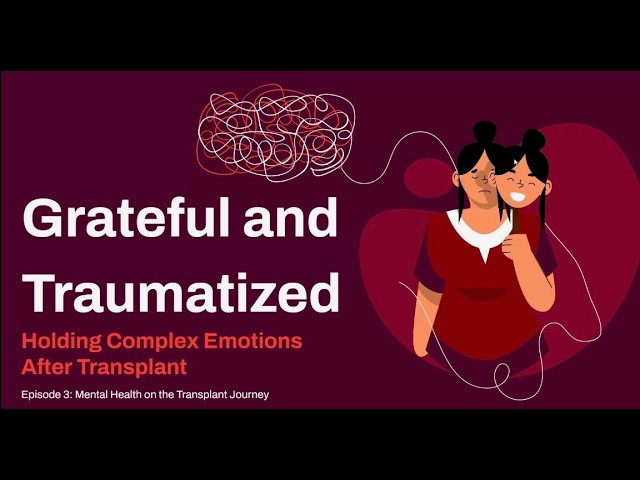
Many transplant recipients or people that have experienced medical trauma have had to face the possibility of death in a very direct way. Some people have prepared wills or had conversations with loved ones about what might happen if they did not survive. Others have spent long periods living with uncertainty about their health and their future. Surviving can bring relief but also emotional aftershocks. Some people describe feeling more aware of how fragile life can be, while
Amy Haertel
Mar 282 min read


Why Organ Transplant Can Be Emotionally Hard Even After Survival
Many recipients find themselves asking a question they did not expect:
“Why do I feel overwhelmed when I survived?”
Understanding the emotional side of transplant can help people realize that these reactions are common and make sense.
Amy Haertel
Mar 223 min read


Understanding Caregiver Crash- Organ Transplant Mental Health
Continuing with themes of Organ Transplant Mental Health. When someone receives an organ transplant, the focus is understandably on survival and medical recovery. Families and caregivers often spend months — sometimes years — living in a constant state of alert. There are appointments, decisions, medications, and moments of uncertainty that require enormous emotional and practical energy. During this time, many caregivers naturally move into survival mode , focusing on doing
Amy Haertel
Mar 142 min read


Emotional and Mental Health After Organ Transplant
Mental Health After Organ Transplant An organ transplant is often described as a miracle, and it is! However, the emotional recovery after transplant can take much longer than the physical healing. During the transplant journey, many recipients and caregivers enter what psychologists call survival mode . The focus is on practical tasks such as medical appointments, medications, and getting through the next step of treatment. In this phase, the brain and nervous system priorit
Amy Haertel
Mar 112 min read
Mutual Silence in the Organ Transplant Journey
Another stop along the Organ Transplant Journey Organ transplant is often described as a life-saving medical event, but the emotional impact of transplant rarely affects only one person. Families, partners, friends, and caregivers often move through the experience together, each carrying their own fears, stress, and uncertainty. One pattern that commonly develops in transplant families is something I often call mutual emotional protection . Both the transplant recipient and t
Amy Haertel
Mar 72 min read


What are emotions? Where do they come from? Let's start understanding emotions.
Understanding emotions as labels our brain assigns to various combinations of body sensations and external inputs involves several key concepts from psychology and neuroscience. Here’s a breakdown of how this process works: 1. Sensorial Input: Emotions often begin with external stimuli (messages from the nervous system to the brain). These can be anything from social interactions, environmental changes, or internal thoughts. Our senses—sight, sound, touch, taste, and smell—
Amy Haertel
Feb 22, 20252 min read
bottom of page